Google Maps for a detailing studio: from service search to a booked visit
How to connect Google Maps, a mobile detailing-service page, advertising and a confirmed appointment without confusing clicks, enquiries, visits and orders.
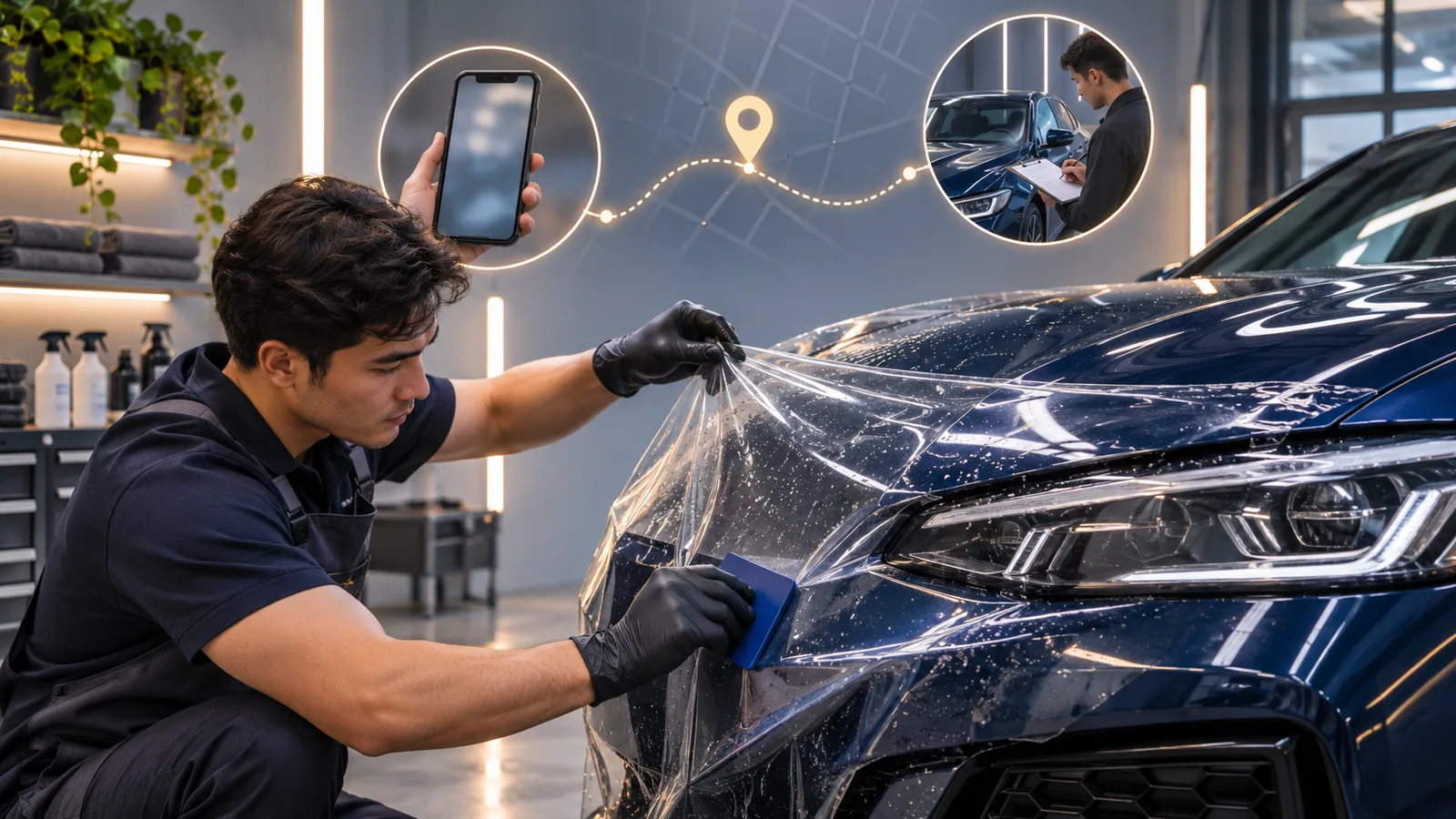
A detailing customer rarely begins with a broad search for “car care”. The task is usually specific: protect the front of the vehicle with PPF, apply a ceramic coating, restore gloss through polishing or clean the interior. On a phone, that search can lead to Google Maps, a studio profile, a service page and then a call or WhatsApp conversation.
This is only one entry point in the marketing system. Google Maps can help someone find a physical studio, but it cannot replace the website, SEO, search advertising, Instagram, GEO/AEO and the handling of real enquiries. A profile view is not a click, a click is not an enquiry, an enquiry is not a booked visit, and a visit is not yet an order.
The search starts with a specific service
Consider a request for PPF on the front zones of a car. The customer compares studios on the map and opens several profiles. The profile should represent the real business accurately: the proper name, an actual customer-facing address, current hours, suitable categories, genuine services and the studio’s own process photos.
Google allows eligible service businesses to add services and custom items. A relevant service may be highlighted in local search and customers can view the Services list in Google Maps. This can clarify the offer, but it does not guarantee visibility for every query or a particular ranking.
An honest PPF journey looks like this:
- The customer opens the profile and a page about protecting the front zones.
- They provide the vehicle model and requested areas, such as the bonnet, bumper, wings or mirrors.
- The studio asks about surface condition and proposes an inspection.
- The date, time and purpose of the visit are agreed.
- The material, scope of work and order are confirmed only after inspection.
If the studio does not confirm times automatically, the button should not promise an instant booking. “Message us to check” is more accurate than “Appointment confirmed”.
The mobile page answers one question
A service page should not be a reduced copy of the homepage. The first screen needs the service, actual geography, a short explanation of the next step and one clear button. The rest can cover the available protection zones, why an inspection is needed, the work sequence, genuine photos, surface limitations, aftercare and only the warranty terms the studio really provides.
The profile link should lead to the relevant service instead of making a visitor search through a general menu again. The page must also work for organic search, advertising and direct visits: a clear URL, one heading, a fast mobile interface and consistent contact details.
How Google Maps works with the other channels
| Channel | Its role | What it cannot promise |
|---|---|---|
| Google Maps and the profile | show the real location, services, hours, photos and route | a ranking or visit from one view |
| Website and SEO | explain PPF, ceramic coating, polishing and interior cleaning on useful pages | a guaranteed ranking or enquiry count |
| Google Ads | test intent for a specific service and geography on the right page | a fixed click or order cost before testing |
| Instagram and paid social | show the process, materials and outcomes using authorised content | that a video view is an enquiry |
| GEO/AEO | provide verifiable answers about work, coverage and booking | guaranteed inclusion in an AI answer |
| Analytics and sales records | connect the source to an enquiry, visit and order | that a click proves revenue |
For a single physical location, ad geography should be assessed through enquiry quality. In Google Ads, the “Presence” option can be compared with the broader “Presence or interest” setting, but neither guarantees that every irrelevant user will be excluded. Each service and city needs its own search-term and conversation review.
Costs and three scenarios without false precision
Costs should be separated into photography and video, service pages, profile management, analytics, call tracking or CRM where needed, Google Ads media and social media spend. These are not PIUN Marketing fees or a forecast of results. The plan depends on the city, service mix, workshop capacity and how enquiries are handled.
Scenario 1. An existing site and one operating studio
Start by correcting the profile, building the priority service pages, marking button events and agreeing the enquiry statuses. Do not expand paid traffic until the mobile journey and call handling have been checked. The main costs are content, page work and measurement.
Scenario 2. Growth through new services
Build separate pages for PPF, ceramic coating and interior cleaning, then run a limited advertising test. Keep Google and social media spend separate from page and creative production. The business chooses a limit after reviewing current platform forecasts; expansion follows the quality of real enquiries and booked inspections rather than click volume alone.
Scenario 3. Several genuine studios
Each location needs its own verified profile, actual hours and geography. Pages should not be cloned by replacing a city name. Separate spend and outcomes by location where the data source allows it; never label an aggregate report as though it belonged to one studio.
Four levels that should not be mixed
| Level | Confirming fact |
|---|---|
| Button click | the user clicked Website, Call, Directions or WhatsApp |
| Real enquiry | the studio received a call or message containing a genuine question and vehicle details |
| Booked visit | the date, time and purpose of an inspection were agreed |
| Order | material, work and terms were confirmed after inspection |
Google Business Profile Performance reports actions on the profile. Calls are clicks on the call button, Website clicks are clicks on the website link, and Directions are route requests. Bookings refer to completed bookings through a connected provider; they do not automatically include appointments agreed by ordinary phone or WhatsApp.
Linking Business Profile to Google Analytics adds a dedicated GBP collection. Google states that only the latest six months are available. If several profiles are linked, values are aggregated and one profile cannot be filtered inside this collection. The aggregate is therefore not an end-to-end order funnel and does not prove enquiry quality, attendance or completed work.

 Leave a review